
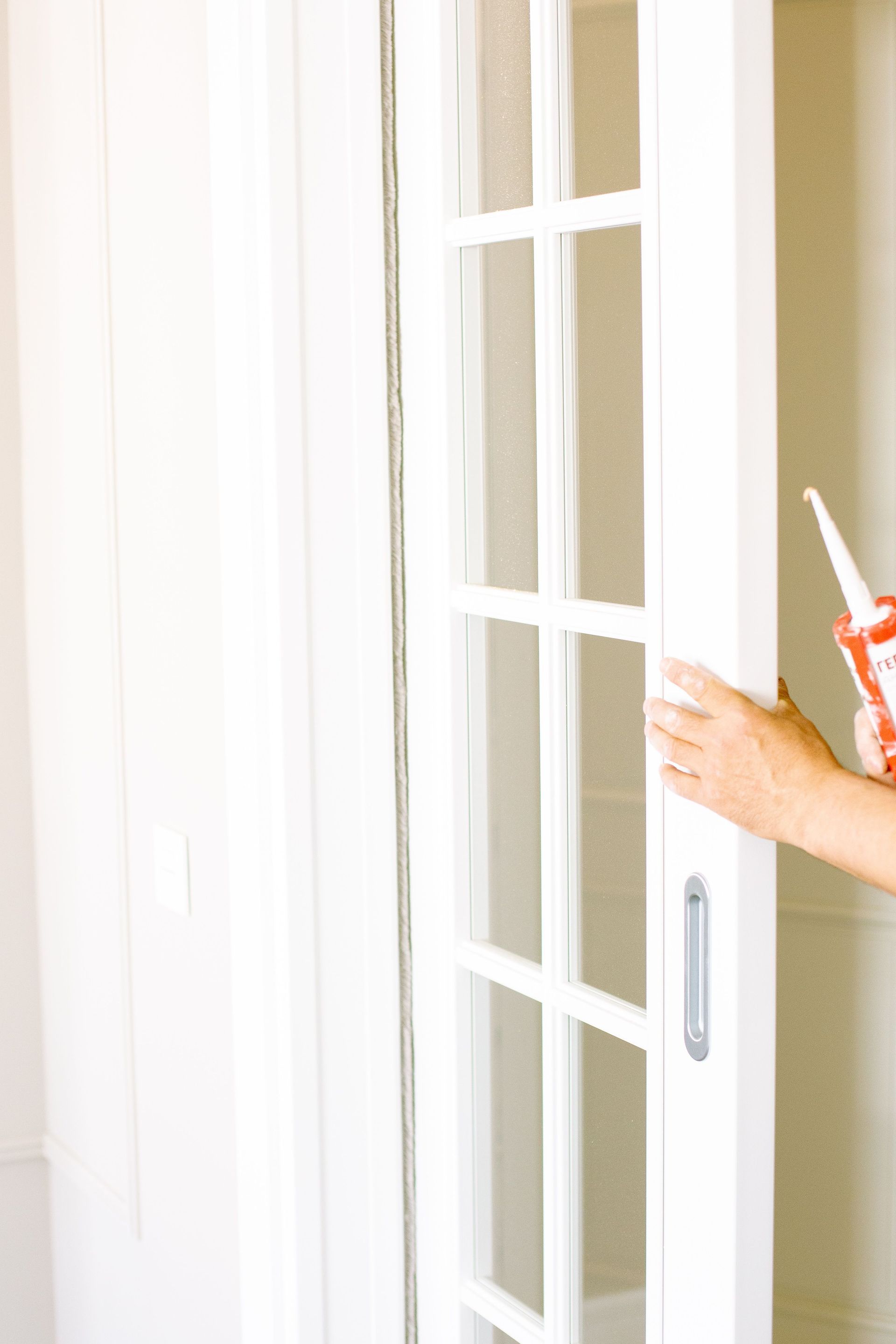
Joints That Keep Water Where It Belongs
Caulking and recaulking in Visalia for stucco and wood-frame homes with failed seals at tubs, showers, sinks, windows, and door frames
Failed caulk at a tub surround or window frame does not announce itself until water has already soaked into the framing or finish behind the surface. Downtown Visalia and Exeter feature many stucco and wood-frame houses built in the 1970s and 1980s, and those homes have dozens of caulked joints at window and door frames, tub and shower surrounds, and sink edges where the original bead has pulled away, cracked, or turned black with mold. RHB Home Maintenance removes the failed caulk and replaces it with a fresh bead matched to the surface, so water stops getting behind the finish before it rots the framing or lifts the tile.
The technician scrapes out the old caulk with a blade and cleans the joint down to bare material, then applies a new bead of silicone at wet areas like tubs and showers or paintable acrylic at painted trim and window frames. The bead is tooled smooth while the caulk is still wet, and the joint is left to cure before water touches it. Silicone caulk needs twelve to twenty-four hours to cure fully, so you should avoid using the shower or tub until the next day.
Request a caulking inspection to identify joints that need attention before water damage starts.
Why Old Caulk Fails and What Happens After It Is Replaced
Caulk fails because it shrinks as it ages, pulling away from one side of the joint, or because the joint flexes more than the caulk can stretch, causing the bead to crack. Once the seal is broken, water seeps through the gap and sits against the framing, drywall, or substrate behind the surface. RHB Home Maintenance handles this repair for homes and HOA properties throughout Visalia, using silicone at wet areas because it stays flexible and does not degrade when it stays wet, and acrylic at painted trim because it can be painted to match the finish.
After the joint is recaulked, you will see a clean bead with no gaps or voids, and water beads on the surface instead of disappearing into the joint. Shower walls stop leaking onto the bathroom floor, and window frames stop showing water stains on the sill or drywall below. The new caulk seals the joint so water cannot reach the framing, which stops rot from progressing and keeps finishes intact.
The recaulking process does not repair damage that has already occurred behind the surface. If water has already rotted framing or lifted tile, those repairs are handled separately after the joint is opened and the damage is visible. Recaulking addresses the seal itself and prevents further water intrusion.
Answers About How the Work Is Done
Property owners and managers often ask about caulk selection and joint preparation before scheduling the service, especially at older homes with multiple failed joints.
What is the difference between silicone and acrylic caulk?
Silicone caulk stays flexible when wet and does not break down in constant moisture, so it is used at tubs, showers, and sinks. Acrylic caulk can be painted and cleans up with water, so it is used at painted trim, window frames, and door casings where the caulk needs to match the finish color.
How is the old caulk removed without damaging the surface?
The technician uses a scraper or utility knife to cut the old bead free from both sides of the joint, then lifts it out. The joint is cleaned with a solvent or scraper to remove residue, so the new caulk bonds directly to the substrate. Care is taken not to gouge tile, wood, or stucco during removal.
Why does caulk at tub surrounds turn black?
Mold grows on the caulk when moisture stays trapped in the joint and air does not circulate. Black staining on the surface of the caulk usually means the bead has failed and water is sitting in the joint, which cannot be cleaned away and requires replacement.
How long does new caulk last?
Silicone caulk at wet areas typically lasts five to ten years, depending on how often the surface is used and how much the joint flexes. Acrylic caulk at painted trim lasts three to five years before it shrinks or cracks and needs replacement. Joints that flex more, such as between dissimilar materials, fail sooner.
What should you check after the caulk is applied?
Look for a smooth bead with no gaps, voids, or air bubbles, and check that the caulk is pressed into the joint rather than sitting on top of the surface. A properly tooled bead bonds to both sides of the joint and sheds water away from the seam.
RHB Home Maintenance is a local crew backed by an owner who manages a large property portfolio, and the team handles caulking alongside your other maintenance needs. RHB Home Maintenance also does caulking and recaulking in Tulare, Exeter, Farmersville, Lindsay, and Woodlake. Call (559) 623-1878 to schedule a caulking inspection and repair.